Indoor enrichment for mud season
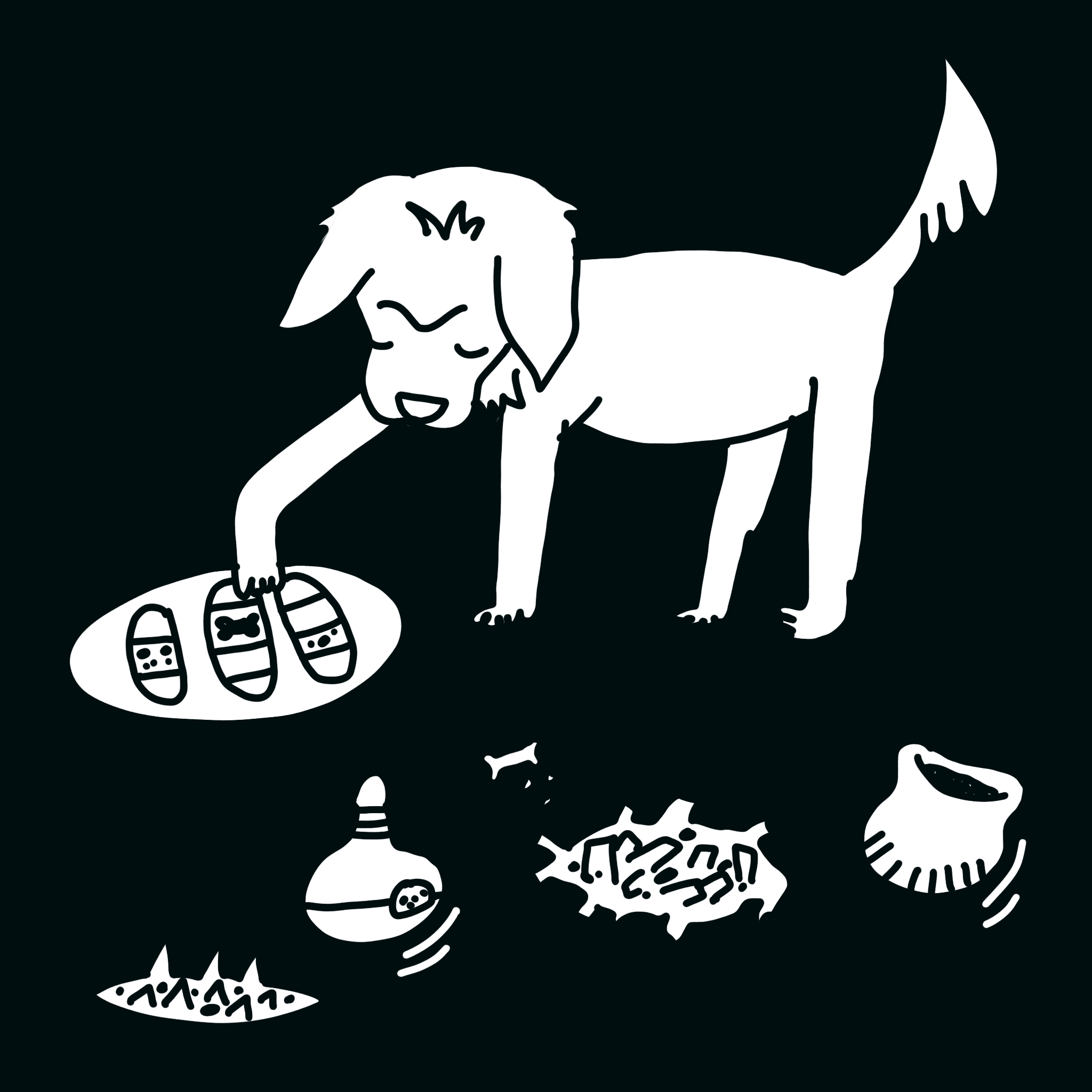
Surviving Maine’s Spring With Your Dog
We have reached the infamous “mud season”, or Maine’s attempt at springtime. As snow build-up finally melts, rains fall, and rivers flood, the earth becomes essentially an oversaturated mud pit. While slightly warmer weather might suggest spending more time outside, the thought of slogging through the woods with a dirty dog is often less than appealing. So if, like many of us, you are planning on spending a bit more time indoors, here are some enrichment ideas to help keep your dog’s needs met while we wait for summer.
What exactly is “enrichment”?
If you have a dog, it's likely you have heard the word “enrichment”. It is often used in marketing for products like puzzle toys, snuffle mats, and slow feeders, and indicates a toy that provides “mental stimulation” for dogs. But enrichment is much more than this.
Professionals in the industry generally define enrichment as anything that improves the overall well-being of your dog, often by allowing them to engage in species typical behaviors like foraging for food. Some people further specify, requiring active solicitation, engagement, or consent from the dog to consider something enriching. This can be condensed into two questions:
Is your dog enjoying it? And is it safe for them to do?
If you answered yes, it's probably enrichment.
Your dog (hopefully) already has some preferred enrichment activities. Going for walks, fetching a ball, and playing with other dogs are all forms of enrichment. Often, our canine companions are trying to create their own enrichment when they do things like chew on shoes, counter surf, go through our trash, and bark at our neighbors. Problem behaviors often point to an unmet need for a certain kind of enrichment that is missing from the dog’s life, so try to view their bad behavior as communication and an opportunity to learn more about your pet.
In order to generate an indoor enrichment plan specific to your dog, first, make a list of all their favorite activities(outdoor or indoor). Make sure these are activities that your dog truly enjoys doing, not just the things we think a dog should like.
I recently ran into this bias with my own dog: I thought we were enjoying a game of indoor fetch, but when I really looked at his body language, I saw that actually he was trying to lay down and chew on something that I repeatedly “stole” and tossed far away. I had an idea in my mind that “dogs like fetch” and projected it onto my experience, instead of observing what was actually happening, which was me being, frankly, rude to my dog.
For this reason, your list may take a few days of unbiased observation to make. If you aren't sure where to start, ask yourself what activities your dog is consistently asking for.
Example:
Going for off-leash walks in the woods
Slow, sniffing walks in town
Chewing on a deer antler
Snuggling in bed
Now make a list of all the things your dog consistently does that you wish they didn’t do. This could be anything, but here are some examples: stealing food, jumping on people, running out of the door, or troublesome barking.
Shredding toys
Finding little pieces of the cat’s food in the kitchen
Barking at strangers in the car
Now go through each activity on both lists and label all the needs that are being met with each item. You can start to think about this in terms of what your dog’s favorite part of the activity is. It might not be as simple as you think: an old arthritic dog who enjoys walks may actually be enjoying the sniffing part of the outing, compared to a young dog who is running circles and is mostly getting physical exercise. A dog who steals a sock may not be looking for something to chew, but rather a game of chase, so be specific and perceptive here.
There are many behaviors that a dog needs the option to do, lest their wellbeing be compromised. Below is a general list of behaviors your dog should have a safe outlet for, that can be categorized, for the purpose of this exercise, as a need. In reality, not every dog needs to do each of these, and your list might include something like swimming, which is not overall a need for dogs but may be one for your particular pup.
Potential needs:
Watching
Stalking
Chasing
Pouncing
Biting
Shredding
Licking
Eating
Playing
Tugging
Running
Walking
Grooming
Socially connecting
Foraging
Sniffing
Investigating
Barking
Sleeping
Resting
Taking space
Each behavior can also be distilled further to what your specific dog prefers- maybe you have a dog that likes “investigating” specifically by prodding with his front paw, and smelling the object. This can provide further insight to what kind of indoor enrichment your dog may want to engage in.
Your dog, like you, also has mental and emotional needs. Examples of these are:
A felt sense of safety
Autonomy and choice
One’s own space
Consistency and/or direction
Positive relationship
Healthy challenge
Mental exercise
Sensory stimulation
We can use both the above lists to decipher what is actually happening for our dogs when they benifit from their favorite activities
Going for off-leash walks in the woods
= Walking, stalking, chasing, running, jumping, sniffing, investigating, foraging, training, social playing/autonomy and choice, positive relationship, sensory stimulation
Slow, sniffing walks in town on leash
= Walking, watching, sniffing, foraging, investigating, consistency, positive relationship, training, sensory stimulation
Chewing on a deer antler
= Chewing, licking, eating, autonomy and choice, healthy challenge, mental exercise, one’s own space, sensory stimulation
Snuggling in bed
= Social connection, positive relationship, a felt sense of safety, consistency, autonomy and choice
Shredding toys
= Chewing, licking, biting, shredding, one’s own space, mental exercise, sensory stimulation
Finding little pieces of the cat’s food in the kitchen
= Foraging, sniffing, licking, eating, mental exercise, healthy challenge
Barking at strangers in the car
= Watching, barking, autonomy and choice, one’s own space, felt sense of safety
Each of the needs being met listed above correspond with my specific dog and the way his life is set up. One of the reasons that chewing on a deer antler provides an opportunity for choice and autonomy for him is because his toys and bones are in a box on the floor that he knows how to go to and select whatever he wants to engage with. So, your dog may be getting different things out of the same activity that my dog does.
You can also see why he tends to be more satisfied, calm, and relaxed after an off-leash walk in the woods– that single activity meets more of his needs than, for example, his practice of hunting for cat kibbles inside.
Now that you have a clearer understanding of what your dog’s needs and preferences are, here is a long list of enrichment ideas, each listed with the general needs being met by willfully engaging. You can look at the list you developed to reference which of these your dog might enjoy most. Look at the needs being met by their problem behaviors, and try to find a positive outlet in this list that ticks the same box.
Free work
Investigating
Walking
Foraging
Licking
Sniffing
Sensory stimulation
Healthy challenge
A felt sense of safety
Autonomy and choice
Mental Exercise
“Free work” is a fancy name for a sort of food-based obstacle course made out of various dog toys and household products. If your dog has never played a game like this before, you can start by spilling kibble or dog treats in a crumpled blanket on the floor, and sit back and watch them root around to find the food. The goal here is mostly to provide healthy challenge and mental stimulation through foraging behavior (sniffing, licking, eating), which can be adjusted to meet the mental needs for the dog you have. Below is an example of an advanced set up to give some ideas about the direction you can go in. This game also can help you watch your dogs movement from afar to assess mobility issues, and give you more information about their preferences (if they keep going to one kind of treat or one kind of method). This is a place to get creative, and can be a great game to have children set up for the dog to play.
Free Work set up (Free Work designed by Sarah Fisher)
2. Find it
Stalking
Walking
Foraging
Sniffing
Eating
Positive relationship
Consistency/pattern
Healthy challenge
Mental exercise
“Find it” is one of the first games I teach people to play with their dogs. This is because it’s simple, easy, and can be played in almost any situation. It also meets a lot of needs, and helps dogs engage in scenting behaviors, which I find to be some of the most overlooked needs in homes. This game can be played in a variety of ways- below is a video demonstrating one of them. I often will play it with a “sit/stay” and then place a treat a few feet away from the dog. Give them an “ok find it” cue, and let the dog go get the treat. This can be done over and over, increasing the distance and eventually leading to the dog searching different rooms or different parts of the house for food. I have done this with my dog, and it plays like a great game of hide and seek. I can hide a number of treats and he will spend 10 minutes searching the whole house for them.
This can also be played like a classic “ping pong” game, where you are tossing treats to the left and right alternately, throwing another treat when your dog whips their head around to look at you. Or could be played more simply with a treat scatter or scatter fed meal— this truly just involves “spilling” dog food on purpose and letting your dog hunt for it. It sounds messy, but depending on how you play, it provides an amazing outlet for foraging behavior and it's likely they will be mentally tired after.
The "Find it" game - Dog Training
3. Flirt pole
Watching
Stalking
Biting
Tugging
Pouncing
Running
Playing
Social connection
Choice and autonomy
Positive relationship
Mental exercise
A flirt pole is a great enrichment tool for dogs with lots of energy, the desire to chase, and the desire to tug! Depending on the size of your space, size of your dog, and the way you play with it, it can be easily done indoors. A flirt pole is basically an enticing toy on a fishing pole (not really, but mechanically sort of) that can be flitted around like a small mammal for your dog to stalk, chase, catch, and play with. It's a great way to get your dog a lot of physical exercise while you are relatively stationary. Flirt poles can be purchased, or made at home with rope, pvc, and a dog toy. Below is a video demonstrating how to use it with a puppy to curb unwanted biting.
4. Movement games
Walking
Running
Mental exercise
Consistency/pattern
Choice and autonomy
Positive relationship
Healthy challenge
This kind of game goes by many names, but essentially involves teaching your dog to run around an object placed at a distance. Below is a video that outlines in detail the steps to achieve this, and is a great way to get your dog thinking and moving.
How Vito’s Thinking Games Will Transform Your Dog Training #281 #podcast
5. Snuffle mat
Investigating
Foraging
Sniffing
Licking
Eating
Healthy challenge
Mental exercise
Choice and autonomy
One’s own space
A snuffle mat is a great and pretty low effort way to give your dog a challenge. It ticks a lot of boxes, particularly around foraging, which often has a significant calming effect on dogs. In essence, it is a small piece of a shaggy carpet-like mat that you place food in for your dog to find on their own. They can be purchased or hand made. You can feed your dog their entire meal in a snuffle mat, use it alone with some treats, or make it a part of other forms of enrichment like free work. Below is a tutorial on how to use a snuffle mat depending on your dog’s experience.
How to Use the Snuffle Mat for Dogs - Pet Experts Explain
6. Kong and lick toys
Foraging
Sniffing
Licking
One’s own space
Autonomy and choice
Consistency
Kongs are perhaps thought of as the original enrichment toy, and for good reason. Licking generally has a calming effect on dogs and other canids. This makes sense– after the heightened arousal of hunting and the adrenaline needed to stalk, chase, catch, and kill prey, the body needs to calm down in order to digest the food an animal has just acquired. It is, therefore, hardwired that shredding, dissecting, licking, and eating all produce melatonin, or a hormone that helps calm the nervous system. There are many toys that appeal to this for dogs, including the classic Kong that can be stuffed with peanut butter, wet dog food, pumpkin, cheese, or anything else your vet approves. In recent years, lick mats have also come into popularity, which are described in the video below.
Lick Mat for Dogs (How and When to Use a Lick Mat)
7. Food puzzles & wobble feeders
Foraging
Sniffing
Walking
Investigating
Licking
Eating
Healthy challenge
Autonomy and choice
One’s own space
Mental exercise
Sensory Stimulation
There are a thousand kinds of food dispensing toys on the market for dogs. They can also be made with household dog-safe items and used under supervision with the same effects. Food puzzles provide primarily mental enrichment for your dog through foraging and problem solving behaviors. Like any toy, they should be made as easy as possible at first, so that your dog gets the hang of what you are doing! Again, they can be used to dispense a few treats or a full meal, and can be chosen based on the type of investigative behaviors your dog tends to already display.
Which Dog Puzzle Toy is Worth It?
8. “Training”
Mental exercise
Positive relationship
Healthy challenge
Much more, depending on what you train
This one is in quotes, because training is just learning, which is happening all the time. By “training”, here, I mean more “formal” training, or an intentional session you do with your dog to teach them a behavior, trick, skill, or game. There are so many reasons to do this, from relational bonding, to giving your dog the necessary skills to be a dog in the world, like how to pay attention to you, take direction, make good choices, and self soothe. It can also be extremely fun and rewarding to watch your dog get the hang of something, and work out a problem in their mind. Below is a youtube playlist that has tons of videos on how to train all sorts of behaviors, starting with the first thing to teach a puppy. If you are struggling to train or to know what to train, please reach out to a professional!
What to Train Your Puppy First
9. Indoor agility
Walking
Running
Jumping
Mental exercise
Predictability
Autonomy
Positive relationship
Healthy challenge
Agility doesn’t just have to be for dogs who want to compete– the same basic skills can be incredibly helpful in getting excess energy out for dogs with cabin fever. This can be set up with formal tools, or objects found around the house, and helps to build confidence in your dog.
Agility for Enrichment and Fun - Dog Training
Tug
Biting
Chewing
Social connection
Play
A once demonized game, tug-of-war has a ton of benefits and no actual link to aggression. It can be an essential part of maintaining physical wellness for older dogs (like weight lifting for people), and be a great outlet for an otherwise annoying behavior in puppies. Providing a specific, ritualized place and way to play this game will help curb this behavior in other places (like your clothes). It is also easy to do in small areas, and can be used to teach other skills like “drop it”, create social bonding, and is a huge blast. Below is a video explaining how to build drive in a dog who seems “meh” about tugging (sorry for the paid promotion at the beginning of the video). Remember to let your dog win!
Stuff swap
Sniffing
Investigating
Foraging
Social connection
Sensory stimulation
Mental exercise
The stuff swap is one of my favorite, low energy enrichment activities. This one is great for a dog who is recovering from surgery, is declining in mobility, or struggles with fear or arousal out in the world. It involves bringing the world in to them; this can be in the form of blankets or toys from a friend’s (vaccinated and healthy) dog or cat, bedding from your livestock, or clothes, fabrics, or anything that has an interesting scent to it. Think of it like your dog’s newspaper– they may not be going out today, but they can still read a story from the outside world. It can also build confidence in a dog who finds the sensory input or pressure of real-time interaction too much, and is often one of the first ways I do dog/dog or dog/cat introductions. And it truly is as simple as it sounds: bring something inside for your dog to sniff!
Shreddables
Shredding
Biting
Licking
Eating (sometimes)
Healthy challenge
Mental exercise
Choice and autonomy
Foraging
In recent years, the dog industry has come to truly understand the importance of this nuisance behavior. Dogs tend to love shredding, and like licking, is a part of foraging that often calms them down. Providing a safe outlet for them to do this can be a little messy, but highly rewarding, when they ask for this game instead of finding it elsewhere. Simply, provide paper bags, cardboard, old mail, sticks, lettuce, celery, or cabbage, and encourage them to shred it to bits. Make sure you supervise your dog, and remove plastic, staples, or other hazardous materials. And be careful which you choose- if you have kids leaving their homework on the ground, I’d stick to cardboard instead of paper. If your dog consumes what they shred, choose veggies over man-made products.
Window watching
Looking
Stalking
Smelling
Sensory stimulation
One’s own space
Autonomy and choice
Window watching is a good way to bring the outdoors in– an open window can provide smells, noises, and other sensory input that may interest your dog. And watching things like birds and other animals can be a fun way to pass the time. This would not be a good or calming activity for dogs that tend to be reactive to their environment, who have barrier frustration, or are liable to go out the window and after a squirrel. But for older dogs, nervous dogs, or dogs who are happy to feel the sun and breeze, providing a place for them to see outside can be great enrichment. A couch or elevated dog bed by a window usually suffices, and can make a big difference in your dog’s day.
Quiet space
One’s own space
Choice and autonomy
Rest
Sleep
A felt sense of safety
This is the last enrichment example listed, but might be the most important. Every dog needs the option to have their own quiet space– a place they won’t be bothered that they can truly relax in in order to complete the nervous system’s stress cycle, recover from excitement, and process and integrate new stimuli. Each dog is different. Some dogs like a place that mimics a cave, others have a crate, closet, special spot on the couch, a bed in the back room, or a few different places like this. Regardless, your dog should have consistent access to this resource, and should be provided an opportunity to learn to use it. You can practice this by giving your dog something calming like a licking toy at this location after a walk or during a calm part of the day. You can use a fan or white noise, play calming music, or do other things to help your dog melt. We are looking for true relaxation here, not just laying down. This means slow deep breathing, relaxed muscles, droopy features, and fluid body language. Ideally, they fall asleep. With practice, you can also put your dog in this location when company comes over, or when something is happening that is “too much” for them. Over time, your dog will learn to put themself here rather than stay in a situation they can’t handle. Other than simply providing a necessary break in the day, a place to calm down, and their own private space, this will teach your dog the skill of self-soothing. For many of us, a primary goal of enriching our dogs’ lives is getting them in this state: fulfilled, calm, and carefree. So make sure you give an opportunity to do so, and show your dog how to be the way you want!
Hopefully, by now you have some ideas for indoor enrichment that will meet your dog’s needs!
As always, tailor each game to the dog you have in front of you, and be sure to talk to your vet about introducing new foods or mobility concerns. And, if you need help finding the right enrichment plan for you, reach out to a qualified trainer or behaviorist. I will also offer the disclaimer that just because I use a person’s video to explain a kind of enrichment, it does not mean I know of or condone everything they have done/will do in their dog training. So use your best judgement! For other materials on my methods or ethics, please see the resources page of my website, which offers books, podcasts, websites, and videos by people who I trust.
Thanks for considering enrichment for your dog, and happy spring!